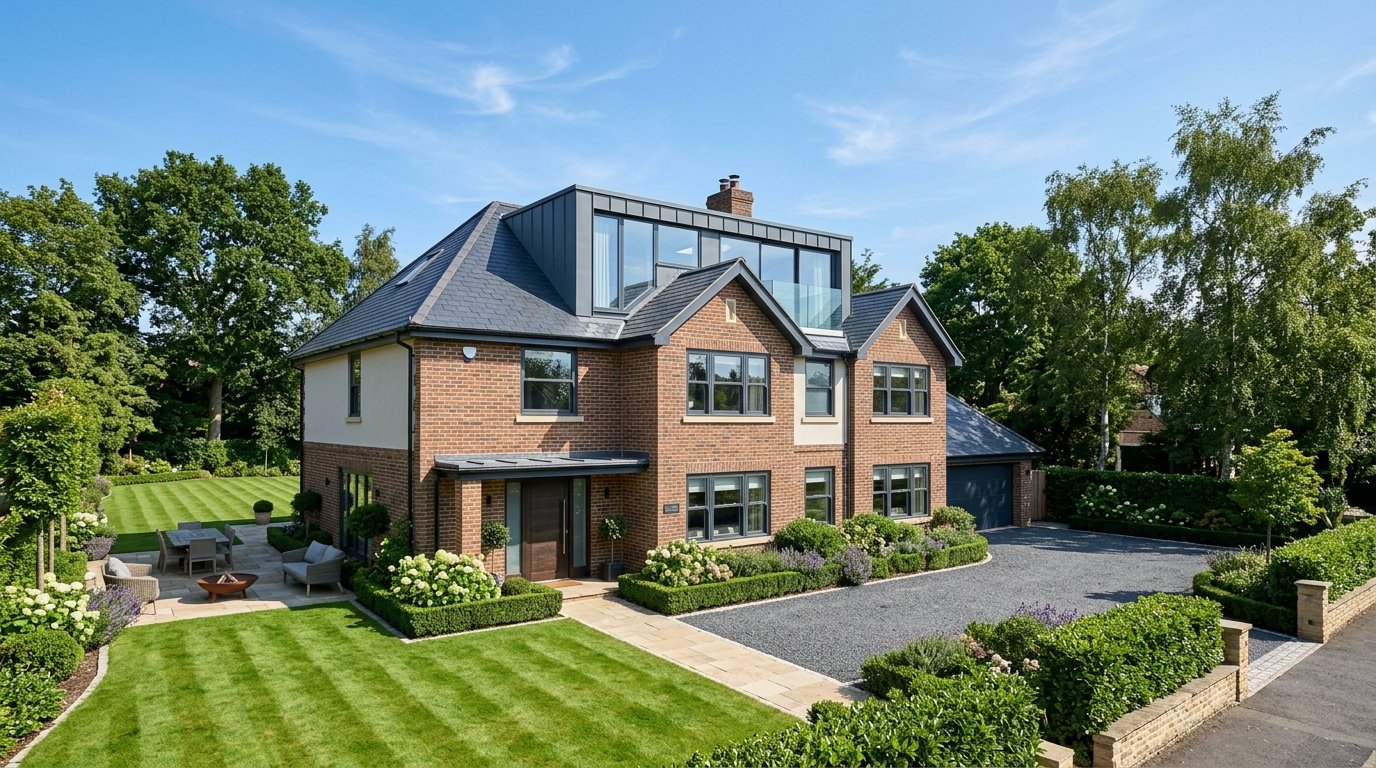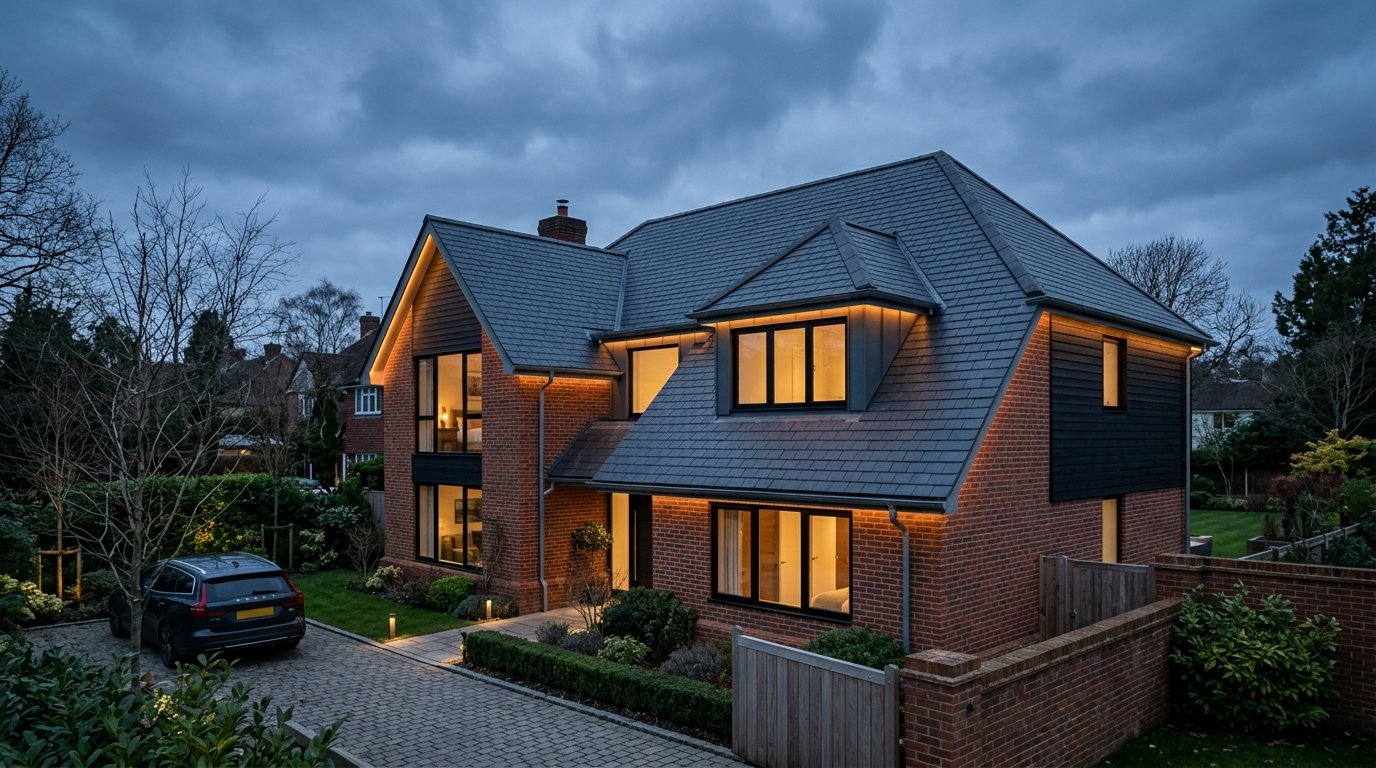
LOFT CONVERSION
How Much Heat Is Lost Through Your Roof? A UK Homeowner Guide
In an uninsulated home, roughly a quarter of heat loss can occur through the roof. The figure is a broad...
Read Guide >
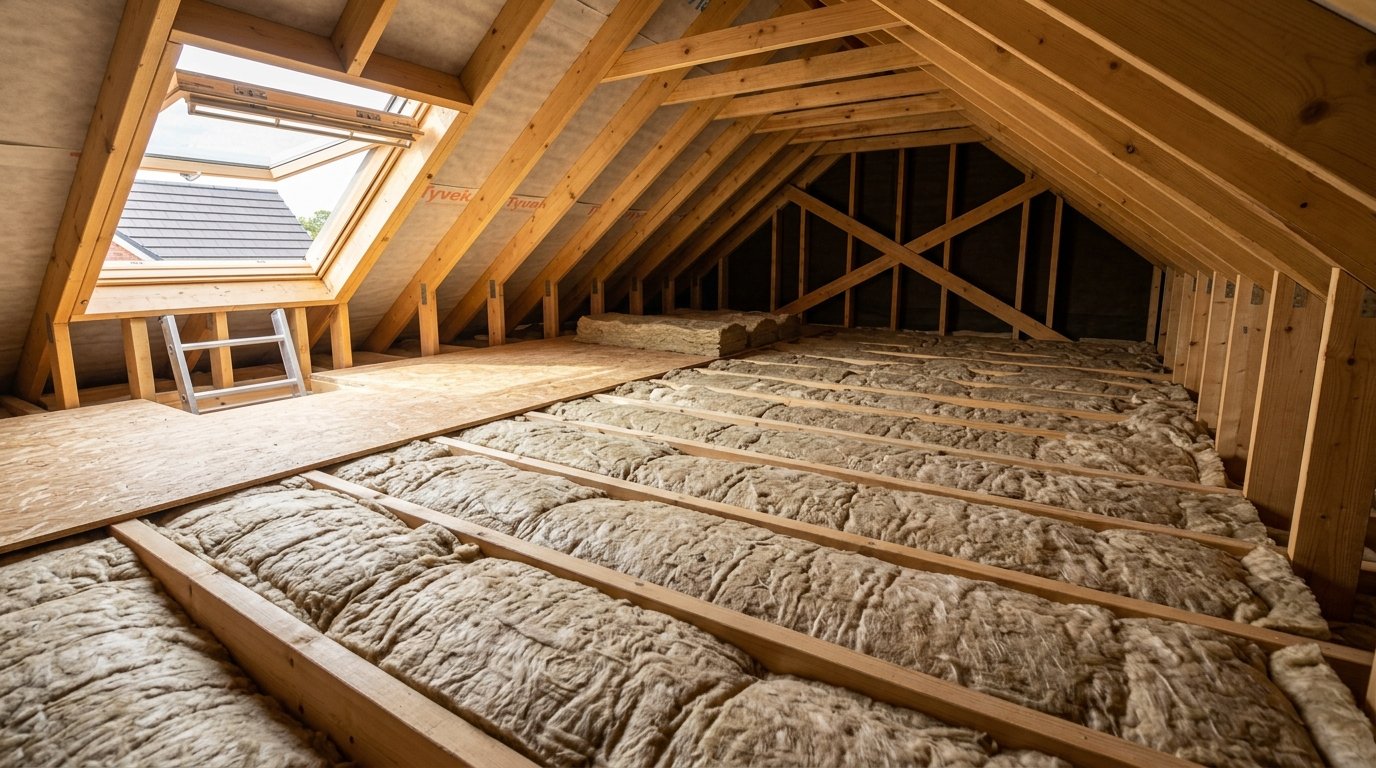
Loft insulation reduces the rate at which heat escapes through the roof, helping a home hold a steadier temperature and reducing the amount of heating needed to maintain comfort. In an uninsulated home, the roof can account for a significant share of heat loss, so improving the loft is often a sensible energy-efficiency measure. The benefits go beyond bills: correct insulation can improve comfort, reduce cold surfaces and form part of a better-performing roof-space design.
The important word is “correct”. Insulation should be suited to the roof construction, kept continuous where possible, and installed without blocking required ventilation or hiding unresolved damp and roof defects. A cold storage loft, a converted loft and a flat roof need different approaches.
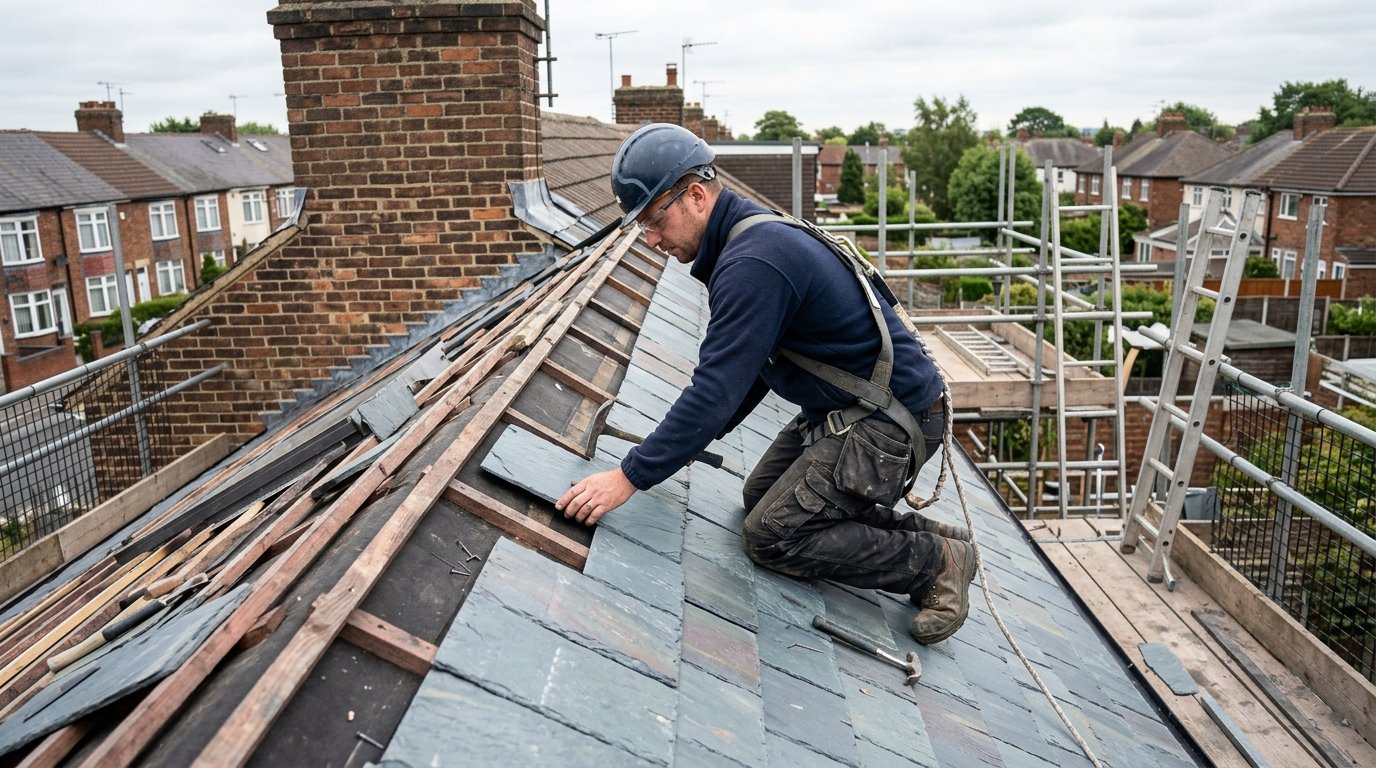
The main purpose of loft insulation is simple: slow the movement of heat from the warm rooms below towards the colder roof space and outside air. Energy Saving Trust guidance notes that around a quarter of heat can be lost through the roof of an uninsulated home, which explains why this part of the building receives so much attention in retrofit advice.
In a traditional cold loft, mineral wool or another suitable material is normally installed at ceiling level. This keeps the occupied rooms within the insulated envelope while the loft above remains unheated and ventilated. The deeper and more continuous the thermal layer, the greater its resistance to heat flow, subject to the characteristics of the material used.
The result is not that heat loss disappears, but that it happens more slowly. That means the heating system has less heat loss to replace when maintaining the same indoor temperature.
Energy savings are only one reason homeowners notice the difference after insulation. Comfort can improve because ceiling surfaces stay warmer and rooms tend to cool more slowly after the heating is reduced.
This is particularly relevant in bedrooms on the top floor. If the ceiling beneath an uninsulated loft is cold, occupants can feel less comfortable even when the air temperature is reasonable. Improving the roof-space insulation can reduce that cold-surface effect.
In summer, insulation can also slow heat transfer from a hot roof into the rooms below, although overheating is influenced by many other factors such as glazing, orientation, ventilation and internal heat gains. Insulation helps manage heat flow; it is not a complete summer-cooling strategy on its own.
When a home loses heat more slowly, the heating system generally needs to replace less heat to maintain a chosen temperature. The exact financial effect varies widely because energy prices, heating systems, house types, existing insulation, thermostat settings and occupancy differ.
For that reason, Hallam Headway avoids treating a generic saving as a guarantee. Published guidance can provide examples for typical homes, but a real property should be assessed on its own condition.
The strongest energy-efficiency decisions also consider the rest of the building. Roof insulation works alongside wall insulation, floor insulation, draught reduction, good windows and sensible heating controls. Our article on how insulation keeps your house warm explains how these elements interact.
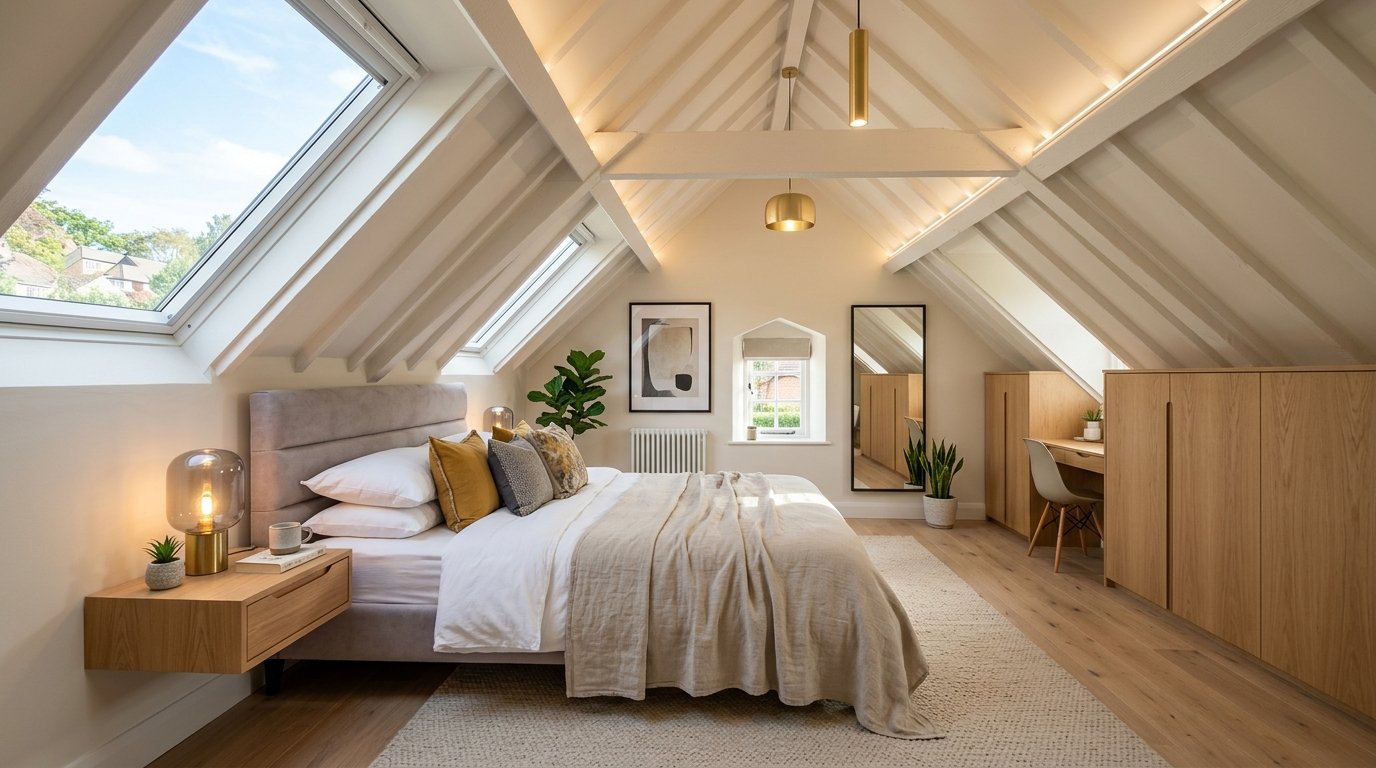
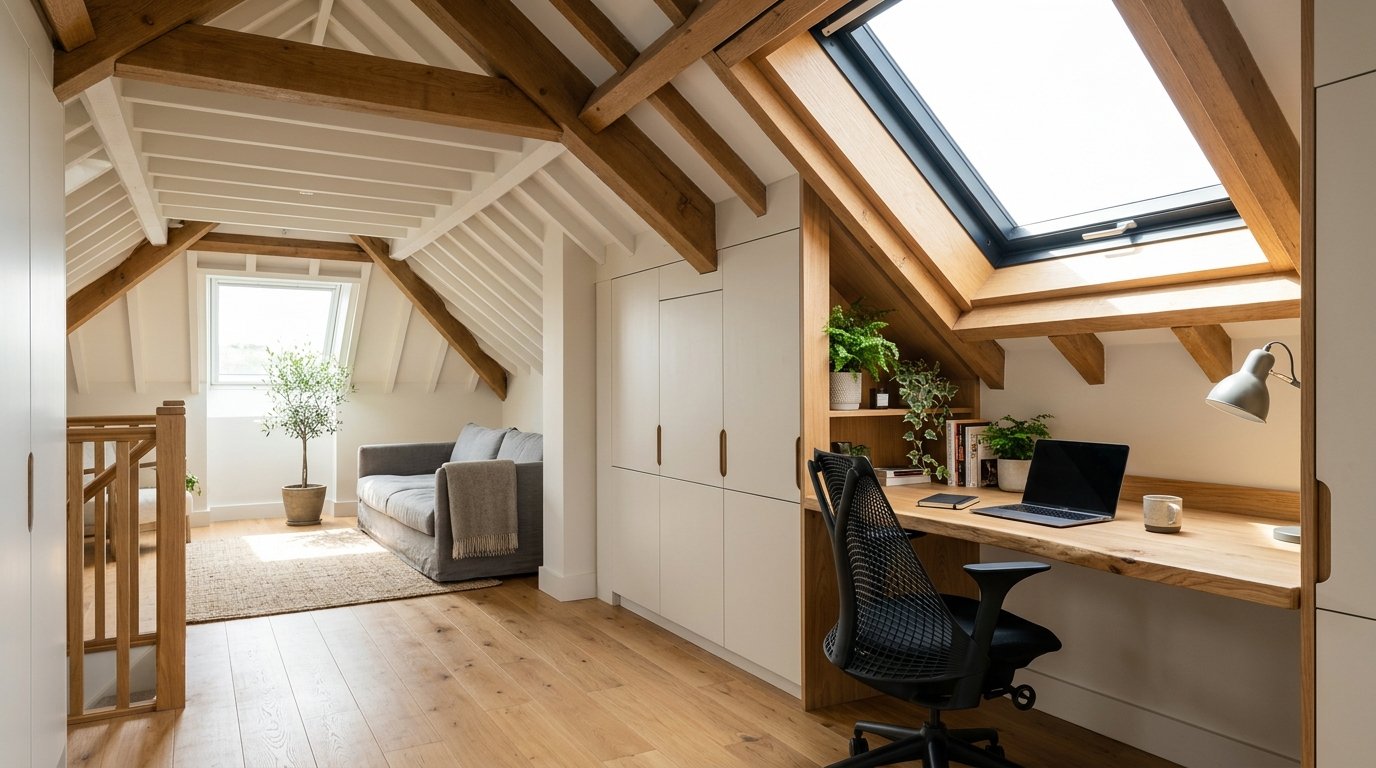
If you are considering a loft conversion, the insulation strategy changes because the loft itself becomes part of the heated accommodation. Instead of insulating only the ceiling of the top existing floor, the new thermal envelope normally follows the roof slopes, dormer walls, gables and other boundaries around the converted space.
This makes early design important. The insulation build-up affects headroom, rafter depth, ventilation, window details and sometimes the external roof profile. Trying to “fit insulation in later” can create avoidable compromises.
A conversion can therefore be an opportunity to upgrade roof-space thermal performance properly, but it should be designed as part of the whole project. Hallam Headway also provides shell loft conversions where the main structural stage is completed to an agreed scope before selected finishes are taken on by the homeowner.
A poorly insulated top floor can feel warm while the heating is running and then cool quickly. That leads to a cycle of reheating the same space. Better insulation increases the thermal resistance of the building envelope, so indoor temperatures can be more stable between heating periods.
This does not mean insulation “creates heat”. It simply reduces the rate at which heat escapes. The heating system still needs to provide warmth, but the building fabric does a better job of retaining it.
This distinction is useful when comparing home-improvement measures. Insulation is a passive fabric measure: once installed correctly, it works whenever there is a temperature difference between inside and outside, without the homeowner needing to switch it on.
Patchy insulation can create local cold areas on ceilings, especially around eaves, loft hatches and places where insulation has been moved. These temperature differences can contribute to discomfort and may create locations where surface condensation is more likely if indoor humidity is high.
Improving continuity can reduce those cold spots. However, damp patches should never be assumed to be an insulation issue. Roof leaks, plumbing leaks, blocked ventilation and indoor moisture can all produce similar symptoms.
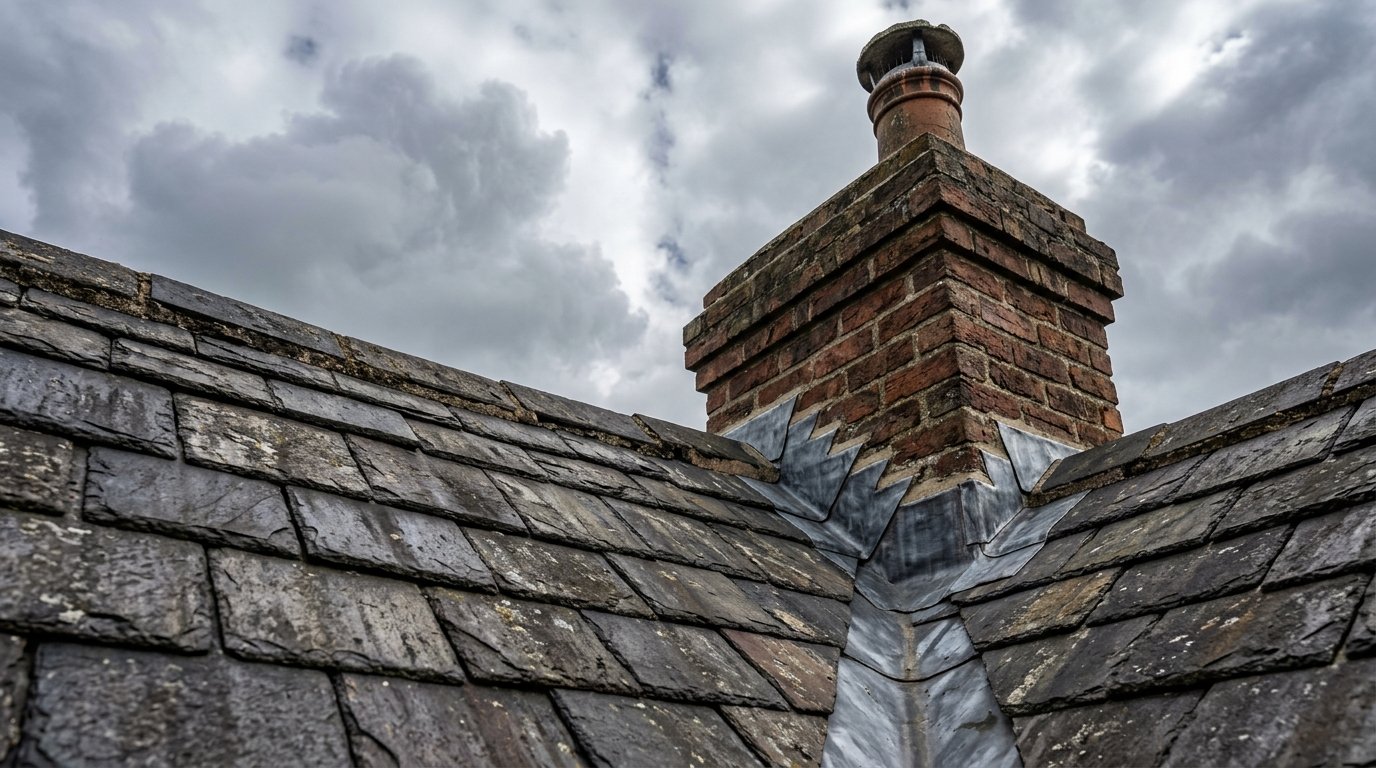
If you notice staining or moisture, investigate the cause first. Our guide to seasonal roof maintenance gives a practical overview of roof checks that can help identify external maintenance issues before they worsen.
For an ordinary unconverted loft, insulation at ceiling level can improve energy performance without changing the usable floor area of the rooms below. This is one reason loft insulation is often considered a relatively straightforward retrofit measure.
The storage area does require thought. Simply laying boards directly over thick insulation can compress it and reduce performance. Raised loft boarding systems can create a deck above the insulation where appropriate, preserving the thermal layer below.
If the loft is used heavily for storage, plan access paths and storage zones rather than compressing the entire area. Keep the loft hatch insulated and draught-sealed too, because a poorly detailed hatch can become a weak point in an otherwise good ceiling layer.
Reducing the heat demand of a building can support wider energy-efficiency goals. Whether a home uses a boiler, heat pump or another system, lowering fabric heat loss means less energy is required to replace heat escaping through the envelope.
That does not mean loft insulation alone makes a home “low carbon”. Heating source, electricity generation, wall and floor performance, ventilation and household behaviour all matter. But fabric improvements are a logical part of a whole-house approach because they reduce demand before or alongside heating-system upgrades.
For older Midlands properties, this can be especially relevant where improvements are carried out in stages. A homeowner may start with accessible roof-space insulation, then address other parts of the property as opportunities arise.
Many loft insulation materials are durable when installed correctly and kept in appropriate conditions. Their performance can be reduced if they become wet, heavily compressed, disturbed by pests or repeatedly moved during electrical and plumbing work.
A periodic visual check is therefore worthwhile. Look for gaps, damp areas, compression and places where insulation has been pulled away from the eaves or services. You do not need to replace insulation simply because it is old if it remains in good condition and the build-up is appropriate, although older installations may be thinner than current recommendations.
Energy Saving Trust currently recommends around 270mm as a common minimum depth for mineral-wool loft insulation. Other products achieve different thermal resistance at different thicknesses, so material type matters.
Insulation and ventilation are often discussed as though one must be sacrificed for the other. In reality, a roof needs a deliberate moisture strategy. The aim is to reduce unwanted heat loss from the living space while preserving the ventilation or vapour-control approach required by the construction.
Blocking eaves vents with insulation can increase condensation risk. Conversely, leaving large uncontrolled gaps from the heated house into the loft wastes energy and can carry moisture into the roof space. Good detailing separates those two air paths.
Bathrooms and kitchens should also extract moisture to the outside, not discharge into the loft. If condensation is already present, identify why before adding more insulation.
Once the loft becomes a room, laying more quilt at joist level is no longer the main solution. The insulation needs to follow the boundaries of the occupied space. This can include rigid boards between and below rafters, insulated dormer cheeks, insulated flat-roof areas and careful treatment around windows and steelwork.
Building Regulations set performance standards for the completed work, and the design should also manage condensation risk. The available rafter depth, roof covering, breathable membrane and ventilation strategy can influence the build-up.
This is why a habitable loft should be treated as a designed construction project rather than a DIY boarding exercise. If you are unsure where the line sits, read Is a Loft Classed as a Room in Your House?.
Start by identifying whether the loft is unconverted, partially converted or already used as living accommodation. That determines where the thermal envelope should be. Measure the depth and condition of accessible insulation, and note whether it is continuous or interrupted by storage boards and services.
Check for roof leaks and moisture. Damp rafters, staining, mould or wet insulation need investigation first. Confirm that bathroom or kitchen ducts do not terminate in the roof space. Look at ventilation paths around the eaves and avoid blocking them with new material.
Consider water tanks, pipes, electrical cables and recessed lights. These may require specific detailing or professional advice. If you plan to store items in the loft, design a raised deck rather than compressing insulation. If a conversion is likely within the next few years, discuss the future layout before investing in work that may later be stripped out.
Finally, think about the whole home. Loft insulation is valuable, but persistent cold can also come from walls, floors, glazing, draughts or heating-system issues. The best result comes from treating the house as one envelope.
The main benefits are reduced roof heat loss, more stable indoor temperatures, lower heating demand for the same comfort level and improved thermal performance of the top of the house.
Energy Saving Trust guidance commonly recommends around 270mm for mineral wool-type loft insulation. Different materials can achieve equivalent performance at different thicknesses, so the correct specification depends on the product and roof construction.
Insulation slows heat transfer in both directions, so it can also reduce heat entering from a hot roof. Summer comfort still depends heavily on glazing, shading, ventilation and internal heat gains.
Correctly designed insulation should not cause damp. Problems can occur when ventilation is blocked, moisture is allowed into the loft, or an unsuitable build-up is used. Existing damp should be investigated before insulation is added.
You can create storage above insulation, but boards should not simply compress a thick insulation layer. A raised system may be needed to preserve the required depth and airflow.
Yes. In a habitable loft, the insulation normally follows the roof slopes, dormer walls and other boundaries of the new room. The build-up forms part of the Building Regulations design for the conversion.
Your quote request has been successfully submitted. Our team will review your project details and contact you within 24 hours.
Wish to get in touch right now?
If you have an urgent inquiry or want to discuss your project immediately, please call our team directly:
Call 07521 101750