LOFT CONVERSION
How Much Heat Is Lost Through Your Roof? A UK Homeowner Guide
In an uninsulated home, roughly a quarter of heat loss can occur through the roof. The figure is a broad...
Read Guide >
A roof rarely needs major renovation because of one cosmetic defect alone. The stronger warning signs are repeated leaks, widespread slipped or broken tiles, deteriorating flashings, sagging roof lines, rotten timber, persistent moisture in the loft and a growing pattern of repairs across several areas. The right response may still be a local repair, but multiple symptoms together justify a professional roof inspection.
Homeowners should avoid waiting for water to pour through a ceiling before acting. Many roof problems develop gradually, and early investigation can help distinguish routine maintenance from a larger renovation project.
One leak after an exceptional storm can come from a local defect. A leak that returns after repairs, appears in more than one room or changes location is more concerning because water can travel along rafters, underlay and masonry before it becomes visible inside.
Look for brown or yellow staining on ceilings, peeling paint, damp patches around chimney breasts and moisture in the loft. If a stain is dry, mark its outline lightly and monitor whether it changes after rainfall. That can help separate old damage from an active leak.
Do not assume the point where water appears is the point where the roof has failed. Valleys, flashings, roof windows and penetrations can admit water several metres away. Repeated leaks need diagnosis rather than repeated surface sealing.
An isolated damaged tile is usually a repair issue. A roof with repeated slipped slates, cracking tiles or large areas of weathered covering may be showing broader deterioration.
The pattern matters. If fixings are failing across the slope, individual replacements can become an ongoing cycle. Older underlay and battens may also be reaching the end of their useful condition even where the covering still looks reasonable from the ground.
Use binoculars for a ground-level visual check rather than climbing onto the roof. Compare both slopes and look for changes after high winds. If fragments of tile or slate regularly appear in gutters or on the ground, arrange an inspection.
A roof line should look broadly consistent. Noticeable dips, ridges that appear to bow, or one area of a slope sitting differently from the rest can indicate structural movement or long-term timber deformation.
Causes can include weakened rafters, failed supports, historic alterations, overloaded roof structures or moisture-related decay. Some older roofs have minor irregularities that have been stable for decades, so appearance alone does not diagnose a defect.
A new or worsening sag is different. If the roof shape appears to be changing, or internal rafters look cracked or deflected, obtain professional advice. Structural issues should not be covered over with new tiles before the supporting roof has been assessed.
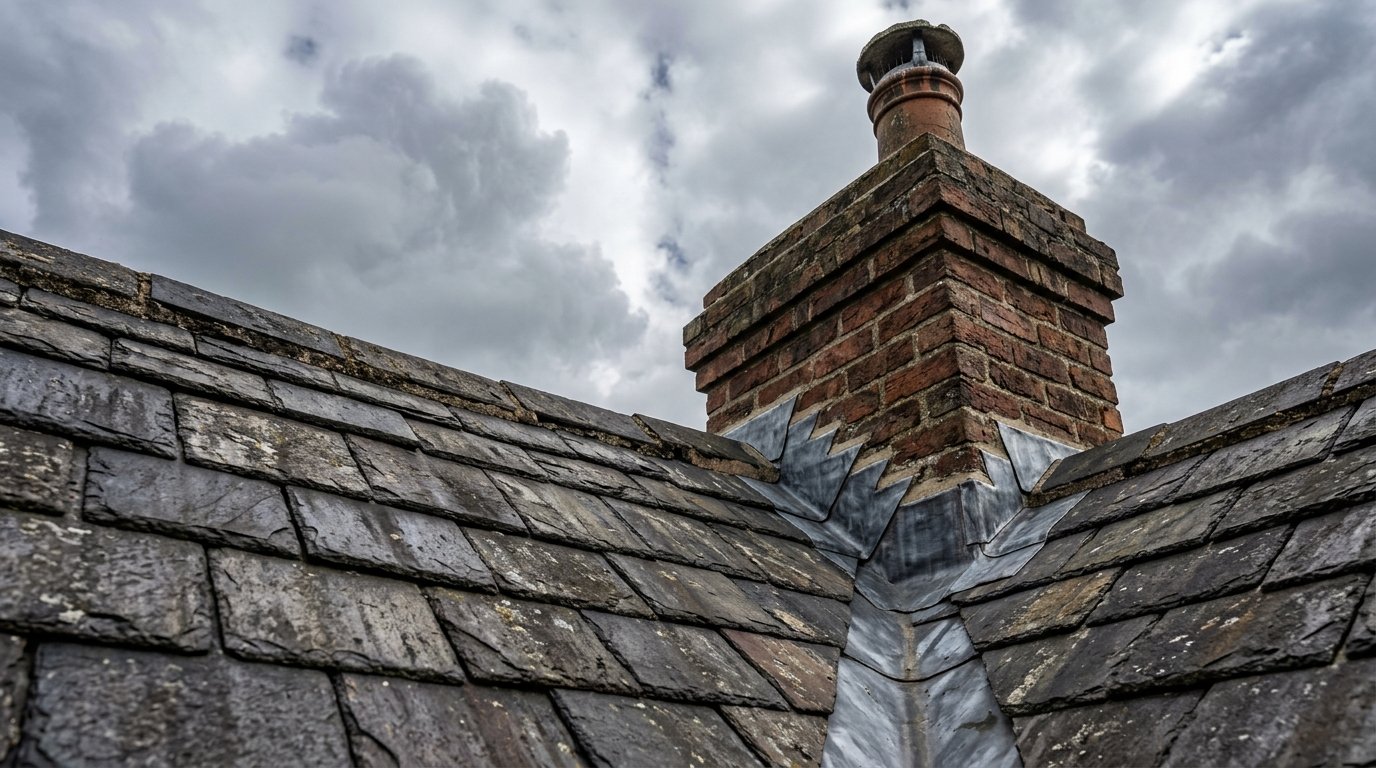
Lead and other flashing systems direct water away from joints where roof coverings meet chimneys, walls, dormers and valleys. These are common leak locations because they experience movement, weathering and concentrated water flow.
Cracked, lifted or poorly patched flashings can allow moisture to bypass an otherwise sound roof covering. Repeated applications of sealant can sometimes hide the real condition rather than restore the correct weathering detail.
If several junctions are failing at once, or old flashings are part of a roof that already has other defects, it can be more efficient to consider them within a broader renovation scope. Hallam Headway’s roofing and loft conversion experience is useful where dormers and roof windows create additional junctions that need to be integrated correctly.
A roof-space inspection can reveal problems before they reach finished rooms. Look for dark staining on rafters, wet insulation, mould on timber, corrosion on metal fixings or a persistent musty smell.
Moisture does not always mean the roof covering leaks. Condensation can build up when humid indoor air enters a cold loft and ventilation is poor. Bathroom extract ducts that discharge into the loft are a common issue. Insulation pushed into eaves vents can also reduce airflow.
This distinction matters because renovating the external roof will not solve a moisture problem caused by ventilation. Likewise, adding insulation over a leak will not fix water ingress. The roof, ventilation and insulation strategy need to be assessed together.
A small amount of light may be visible at intentional ventilation openings, but obvious daylight through damaged covering, torn underlay or open junctions deserves attention.
Inspect from a safe loft access point during daylight hours. Do not walk across unsupported ceiling areas. If you can see a clear hole, note its approximate position and arrange an external inspection.
Remember that roofing membranes and underlays can make a roof weather-resistant even when tiny points of light are visible around certain details, so daylight alone is not proof that the whole roof needs replacement. It is simply a useful symptom to investigate alongside moisture and external condition.
Granular debris from some roof coverings, flakes of mortar, pieces of tile or slate and fragments of deteriorated underlay can collect in gutters. A small amount of general debris is normal, but repeated roofing material can indicate wear.
Gutters themselves also affect the roof edge. If they are blocked or badly aligned, water can overflow against fascia boards, soffits and masonry. Long-term saturation at the eaves can contribute to timber decay.
Check gutters from safe access or use a professional service. Avoid leaning from upper windows or using unstable ladders. If the gutter problem sits alongside damaged eaves, slipped tiles or rotten fascia, consider the roof edge as one repair area rather than treating each symptom separately.
A roof can be repaired successfully many times, but a growing collection of patches can signal that the underlying system is becoming unreliable. Different replacement tiles, large areas of sealant, repeated mortar repairs and several generations of flashing patches may make future leak tracing increasingly difficult.
The decision is not based on appearance alone. A patched roof can still be serviceable. The question is whether repairs are becoming more frequent, more expensive or less durable.
When several areas need work at the same time, a planned renovation can sometimes provide a more coherent solution. A proper survey should establish which elements genuinely need renewal and which can be retained.
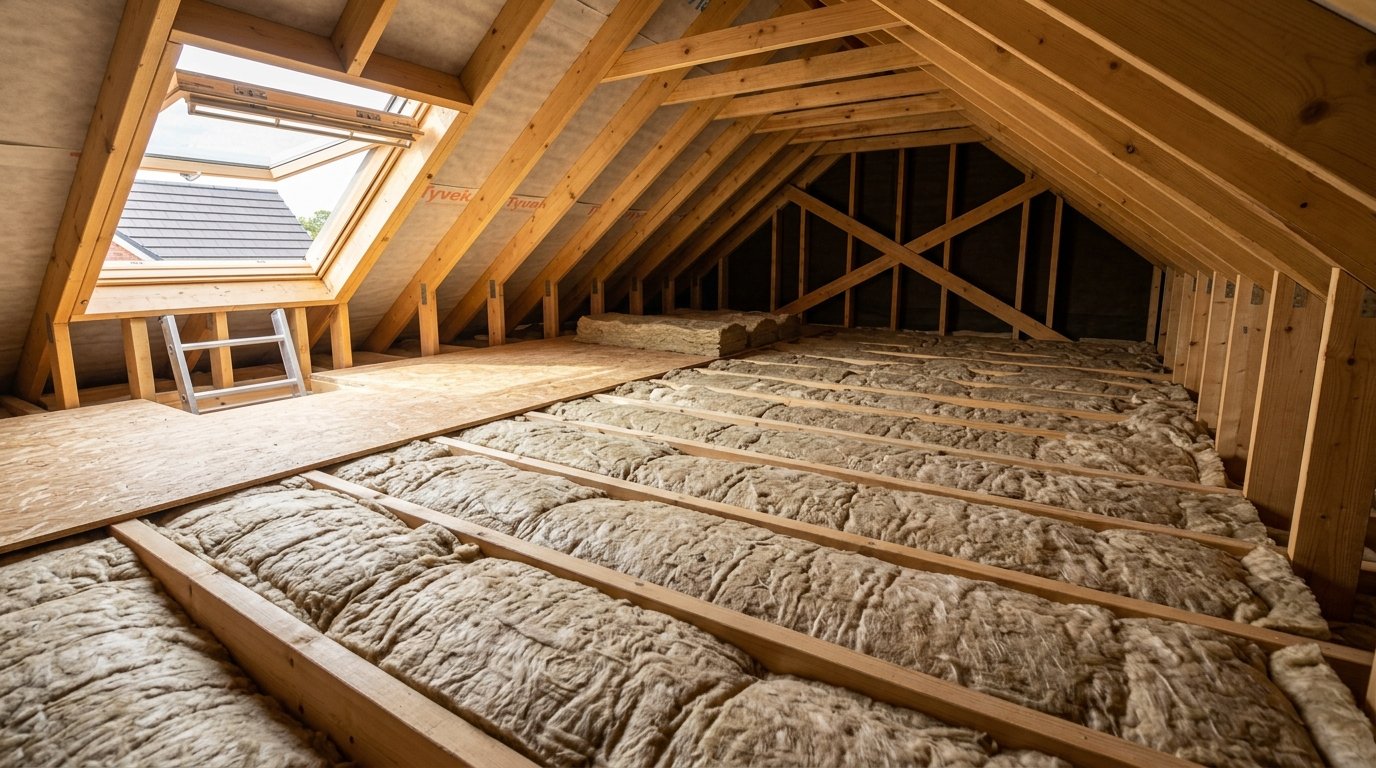
A roof can be weatherproof but still be part of an inefficient or uncomfortable top floor. If the roof covering needs major work and the loft has old, patchy insulation, it may be sensible to review both together.
Energy Saving Trust guidance notes that around a quarter of heat can escape through the roof of an uninsulated home. Our article on how much heat is lost through your roof explains why that figure varies and how to investigate heat loss properly.
Do not renovate a roof solely because energy bills feel high. Insulation can often be improved independently. But if the roof is already being stripped, there may be an opportunity to coordinate underlay, ventilation and insulation work efficiently.
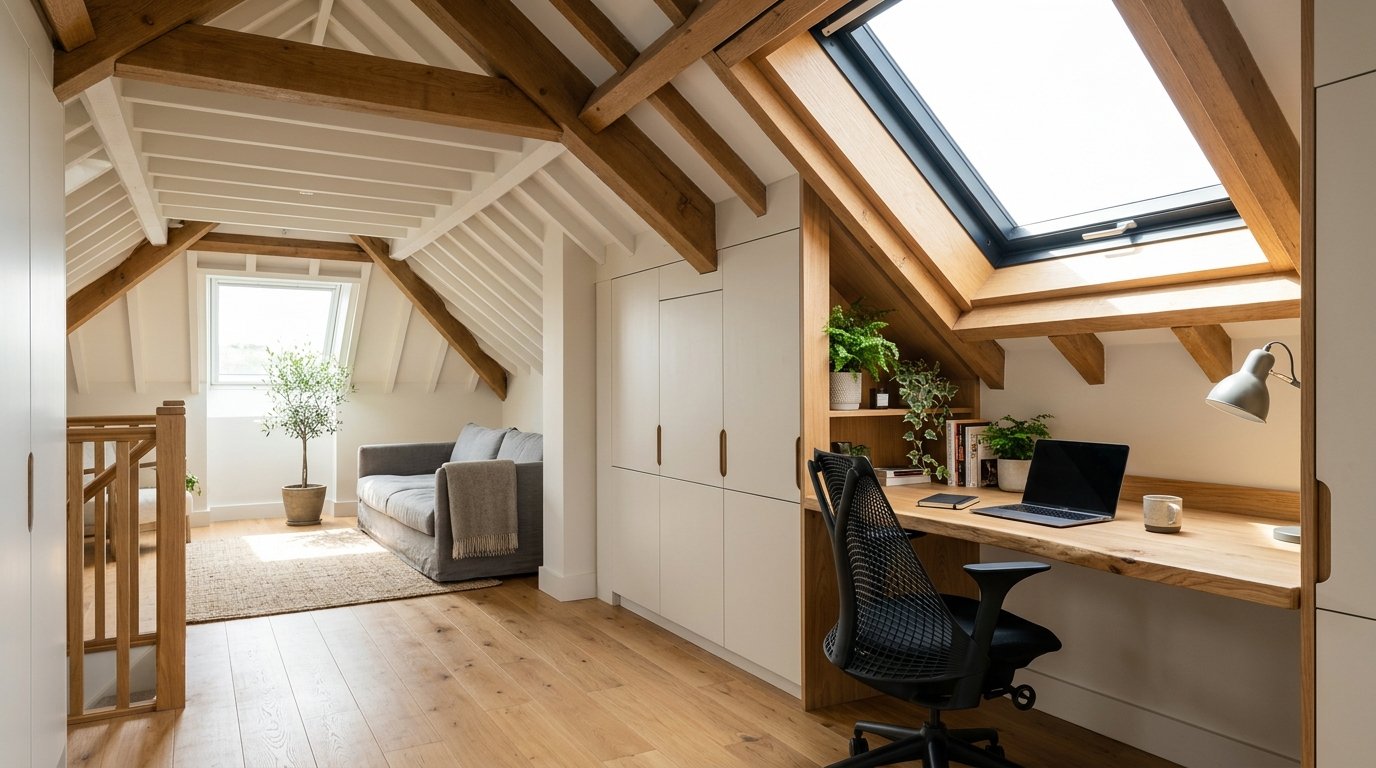
A loft conversion changes the loads, insulation strategy and often the external form of the roof. If the existing covering, battens or flashings are already in poor condition, it is worth identifying that before the conversion design is finalised.
A rooflight conversion may retain much of the existing roof shape, while dormer and hip-to-gable projects involve more substantial alteration. Coordinating necessary roof renovation with the conversion can reduce duplicated access and make detailing around new windows, dormers and structural work more coherent.
This does not mean every conversion needs a new roof. Many projects retain sound coverings. The point is to inspect first so the design is based on the real condition of the building.
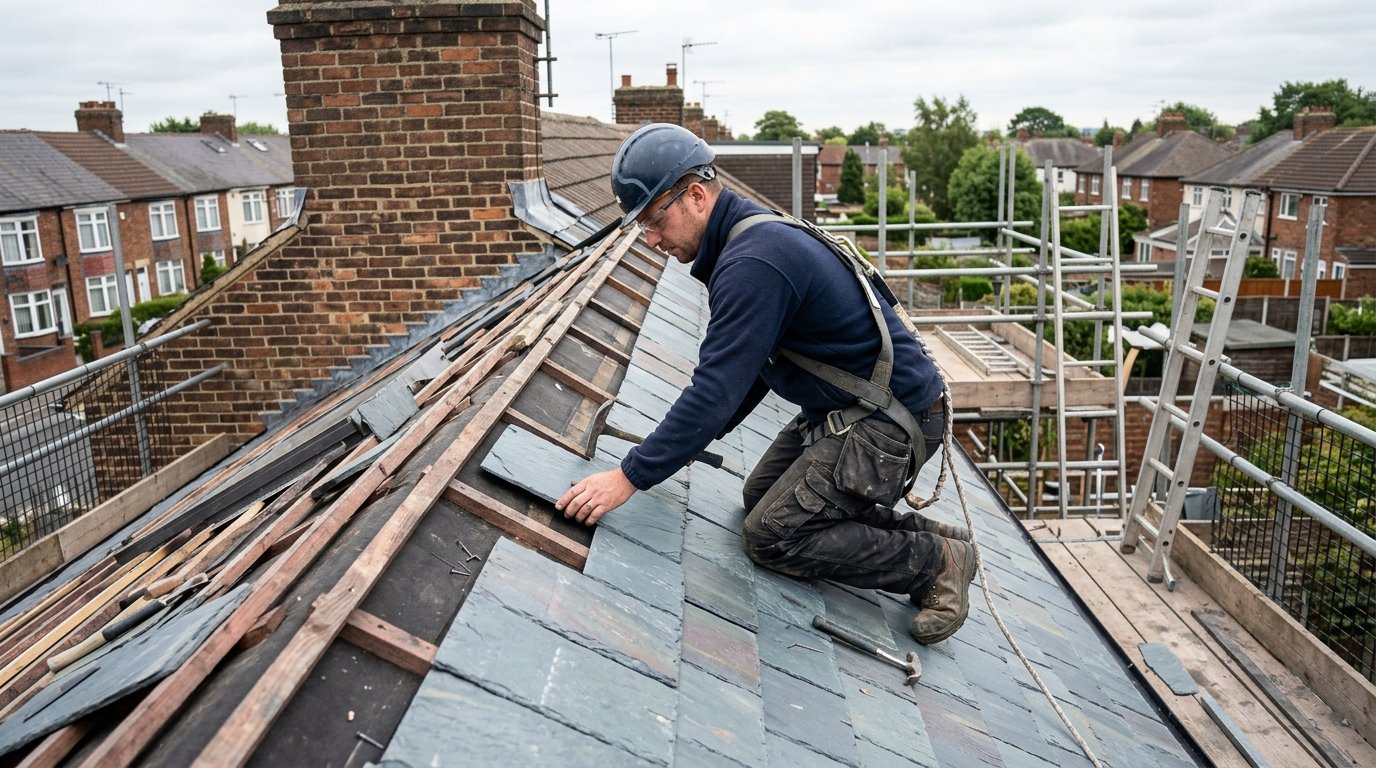
A repair addresses a defined defect: a broken tile, failed flashing detail or local leak. Renovation is a broader term that can include renewing several roof components while retaining parts that remain serviceable. Replacement usually implies stripping most or all of the existing covering and rebuilding the roof layers as required.
Homeowners sometimes ask for a “new roof” when a smaller repair would solve the problem, while others continue patching a roof that now has widespread failures. The best decision comes from condition, not terminology.
Ask a contractor to explain what is wrong, what can remain, what needs replacing and what evidence supports the recommendation. A detailed scope is more useful than a one-line quote for “roof renovation”.
Roof coverings have typical service-life ranges, but age alone is not a diagnosis. Exposure, material quality, pitch, installation, maintenance and local weather all affect condition. Some older slate roofs perform well because the slates and structure remain sound. A newer roof can fail early if detailing or installation was poor.
Use age as context. If the covering is older and multiple defects are appearing, broader renovation becomes more plausible. If a relatively new roof leaks in one place, investigate the detail before assuming the whole covering has failed.
If you do not know the age, old sales particulars, building-control records, invoices and neighbouring properties may provide clues.
A useful inspection looks at roof covering, ridge and hip details, valleys, flashings, penetrations, gutters, roof edges and visible structural elements. The loft should be inspected where accessible for staining, ventilation and timber condition.
For larger projects, the contractor should explain whether the underlay and battens can be retained, whether timber repairs are expected, and how insulation and ventilation interact with the proposed work. Photos can help homeowners understand defects that are not visible from ground level.
Where structural movement is suspected, a structural engineer may be appropriate. The goal is to define the cause before committing to the remedy.
There is no single universal sign. Repeated leaks combined with widespread covering defects, failing flashings or deteriorated roof layers are stronger indicators than one isolated broken tile.
No. Many leaks are caused by local defects that can be repaired. Replacement becomes more likely when problems are widespread, repeated or linked to broader deterioration.
Moss alone does not mean a roof needs replacing. Heavy growth can hold moisture and block drainage, but the underlying condition of the tiles, slates and details matters more.
You can carry out ground-level checks and inspect an accessible loft safely. Avoid climbing onto the roof without appropriate training and equipment.
Only if its condition justifies it. A loft conversion survey should identify whether the existing covering and structure can be retained or whether coordinated roof work is sensible.
There is no fixed rule for every house, but a visual check at least once or twice a year and after severe weather is practical. Older roofs or roofs with a history of problems may justify more frequent attention.
Your quote request has been successfully submitted. Our team will review your project details and contact you within 24 hours.
Wish to get in touch right now?
If you have an urgent inquiry or want to discuss your project immediately, please call our team directly:
Call 07521 101750